
As parents and caregivers, we know our children better than anyone else. We know their favorite colors, the snacks they beg for at the grocery store, and the toys that keep them busy. When we want to encourage them to learn a new skill—like using their words, getting dressed, or potty training—it is only natural to reach for their favorite things as rewards.
But have you ever found yourself offering your child their absolute favorite toy, only for them to ignore your request completely?
It can be incredibly frustrating. You might think, “But they love this toy! Why isn’t this working?”
First, take a deep breath. You are not doing anything wrong, and your child isn’t just “being difficult.” There is a highly misunderstood concept in the world of learning and behavior that can completely change how you look at these moments.
Let’s take a look at this helpful infographic from Star ABA to understand why this happens and how we can make learning easier and more joyful for your child.
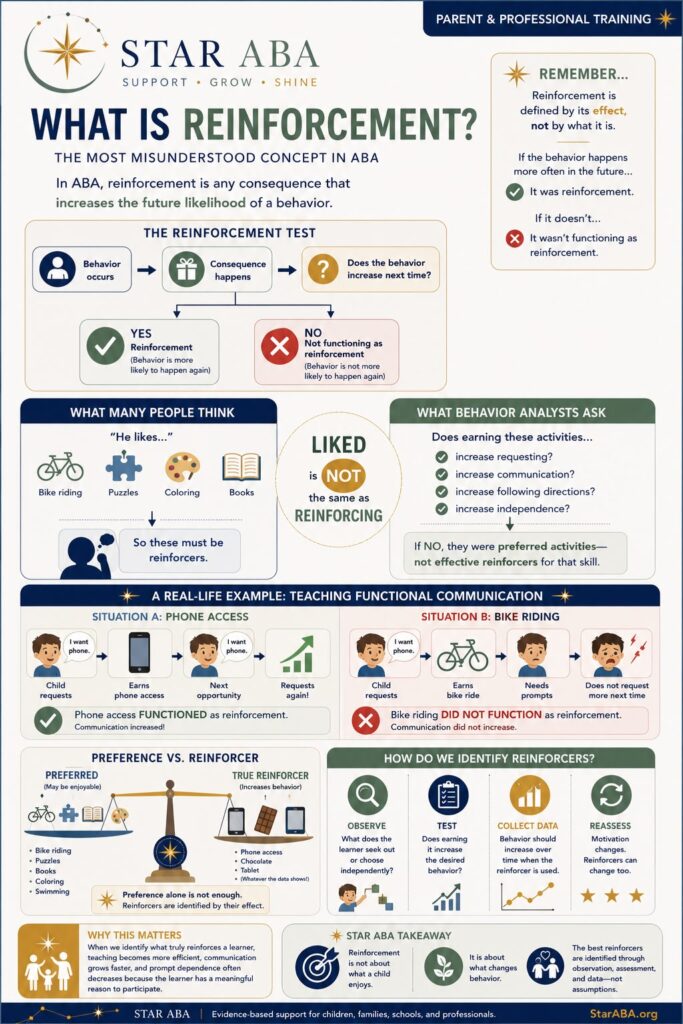
The Big Shift: “Liked” is Not the Same as “Reinforcing”
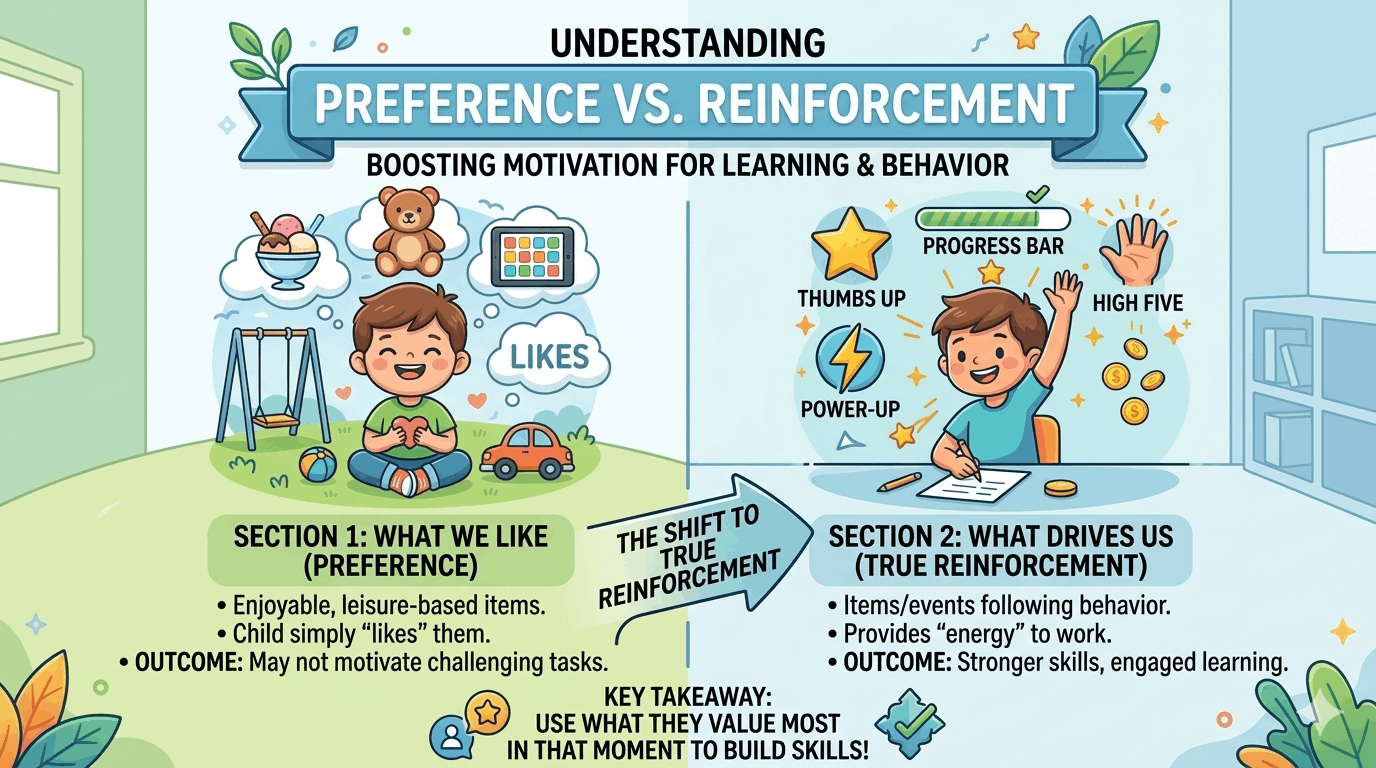
As parents, we naturally focus on what our children like. If they love riding their bike, we think of the bike as a reward.
However, in behavior science, an item is only considered a reinforcer if it actually increases the behavior we want to see.
- Preferred Items: Things your child enjoys when they are just relaxing or playing.
- True Reinforcers: The specific things that give your child the energy, motivation, and drive to do something challenging in that exact moment.
Think of it this way: You might love eating sushi. It’s one of your favorite things! But if your boss offered to pay you in sushi instead of a paycheck, you probably wouldn’t show up to work tomorrow. The sushi is preferred, but it isn’t reinforcing enough to make you do hard work.
Our kids feel the exact same way. Learning a new skill is hard work for them!
A Tale of Two Situations
Look at the Real-Life Example section in the middle of the infographic. It shows two different scenarios for a child learning to say, “I want phone.”
- Situation A: The child asks, gets the phone, and feels successful. Because they got exactly what they wanted, they are highly likely to use their words and ask again next time. The phone successfully functioned as a reinforcer.
- Situation B: The child asks, but instead, they are given a bike ride. Even though the child might enjoy bike riding generally, it wasn’t what they wanted right then. Because they didn’t get what motivated them, they didn’t request it next time without extra help. The bike did not function as a reinforcer.
As caregivers, we often try to guess what our kids want, or we try to substitute something we think is “better” or “healthier.” But to truly help them learn, we have to follow their lead and honor what matters to them in that specific moment.
How to Find Your Child’s True Reinforcers
Discovering what truly motivates your child doesn’t require a science degree. It just takes a little bit of curious, compassionate observation. The graphic breaks it down into four simple steps:
- Observe with Curiosity: Watch your child during free time. What do they reach for first when nobody is telling them what to do?
- Test it Out: When you ask them to do a small task, offer that item. Does their face light up? Do they try harder to complete the task?
- Notice the Trends: You don’t need a formal clipboard, but just keep a mental note. Is a certain snack consistently making getting dressed easier every morning?
- Embrace Change: Children grow and change rapidly. What worked like magic on Monday might be completely boring to them by Friday. That is normal and okay!
Moving Forward with Compassion
Teaching a child with unique learning needs requires an immense amount of patience, love, and energy. When a reward fails, it isn’t a reflection of your parenting or your child’s ability to learn. It is simply a signpost telling us to pivot and try a different motivator.
When we identify what truly reinforces our children, learning stops feeling like a battle of wills. Instead, it becomes a meaningful partnership where your child feels heard, understood, and supported.