
Understanding Autism in India: Nurturing Hope, Acceptance, and Inclusion
For a long time, across many communities in India, a child who did not speak on time or preferred playing alone was often simply labeled as “shy,” “stubborn,” or “slow.” Today, we understand that many of these children are navigating the world through a unique lens. They are part of a growing, vibrant community of autistic individuals. Understanding autism spectrum disorder (ASD) in India is a journey toward empathy, breaking down old stigmas, and building a society where every mind is valued.
The Reality: Numbers and Context
Autism is not a disease to be cured. It is a lifelong neurodevelopmental condition that shapes how a person perceives the world and interacts with others.
- Prevalence: Studies estimate that roughly 1 in 68 children in India is autistic.
- Scale: This translates to millions of individuals across the country.
- Diversity: Autism affects people across all socioeconomic, cultural, and regional backgrounds.
While these statistics represent a vast community, the experience of autism remains deeply personal for every individual and their family.
Navigating the Challenges
Raising an autistic child or navigating life as an autistic adult in India comes with unique cultural and structural hurdles.
The Weight of Social Stigma
In many Indian households, a developmental diagnosis is still met with denial or misplaced guilt. Parents, particularly mothers, often face unfair societal blame or isolation from extended family functions due to a lack of awareness about sensory meltdowns.
Accessing Early Intervention
Early diagnosis can significantly improve an autistic child’s quality of life. However, families outside major metropolitan areas face a severe shortage of developmental pediatricians, child psychologists, and speech therapists.
Financial and Educational Strain
Therapy and specialized education can be financially draining. While the government’s Rights of Persons with Disabilities (RPWD) Act, 2016 officially recognizes autism and mandates inclusive education, implementing these accommodations in crowded classrooms remains an ongoing battle.
A Changing Tide: Signs of Hope
Despite these challenges, India is witnessing a beautiful, compassionate shift. The landscape is changing because of the relentless love of families and the dedication of advocates.
- Grassroots Support: Parent-led support networks are blooming across WhatsApp, Facebook, and local communities, ensuring no family has to walk this path alone.
- Inclusive Spaces: From sensory-friendly movie screenings in metros to inclusive cafes employing neurodivergent adults, society is beginning to open its doors.
- Increased Visibility: Indian media, literature, and films are slowly moving away from caricatures, portraying autistic individuals with the depth, dignity, and nuance they deserve.
Embracing Neurodiversity
To move from mere awareness to true acceptance, we must change how we view autism. Autistic individuals possess immense strengths—such as deep focus, remarkable attention to detail, honesty, and unique creative perspectives.
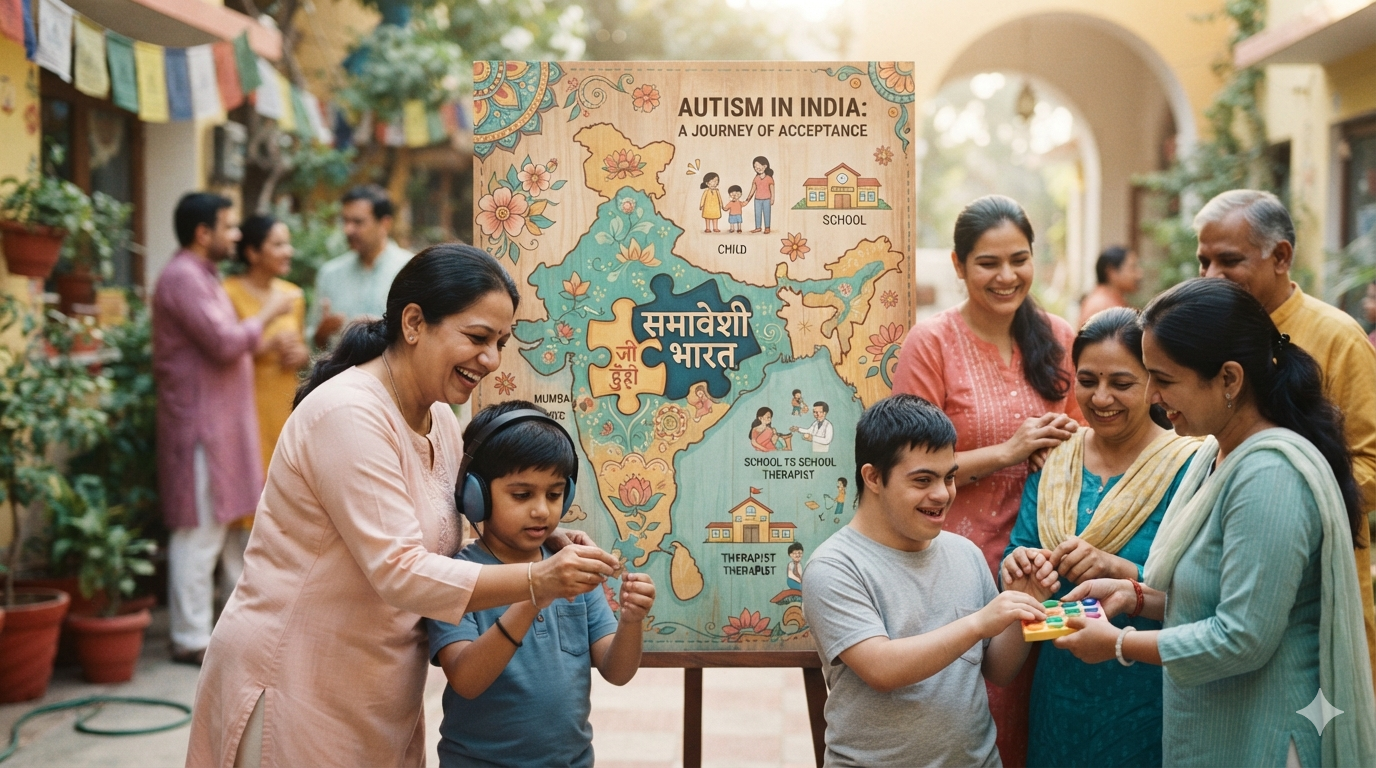
True inclusion means we stop asking autistic individuals to fit into a rigid mold. Instead, we must soften the world around them. Simple acts—like a school welcoming a child with a noise-canceling headphone, an employer focus on skills rather than eye contact, or a neighbor offering a kind smile instead of a judgment during a sensory meltdown—make all the difference.
We can make India a more compassionate place for the autism community by sharing stories and learning together. If you are a parent, educator, or ally, let me know if you would like to explore local support networks, financial aid schemes available under Indian law, or practical sensory tools for the home.